2026 July Stewardship Advocate
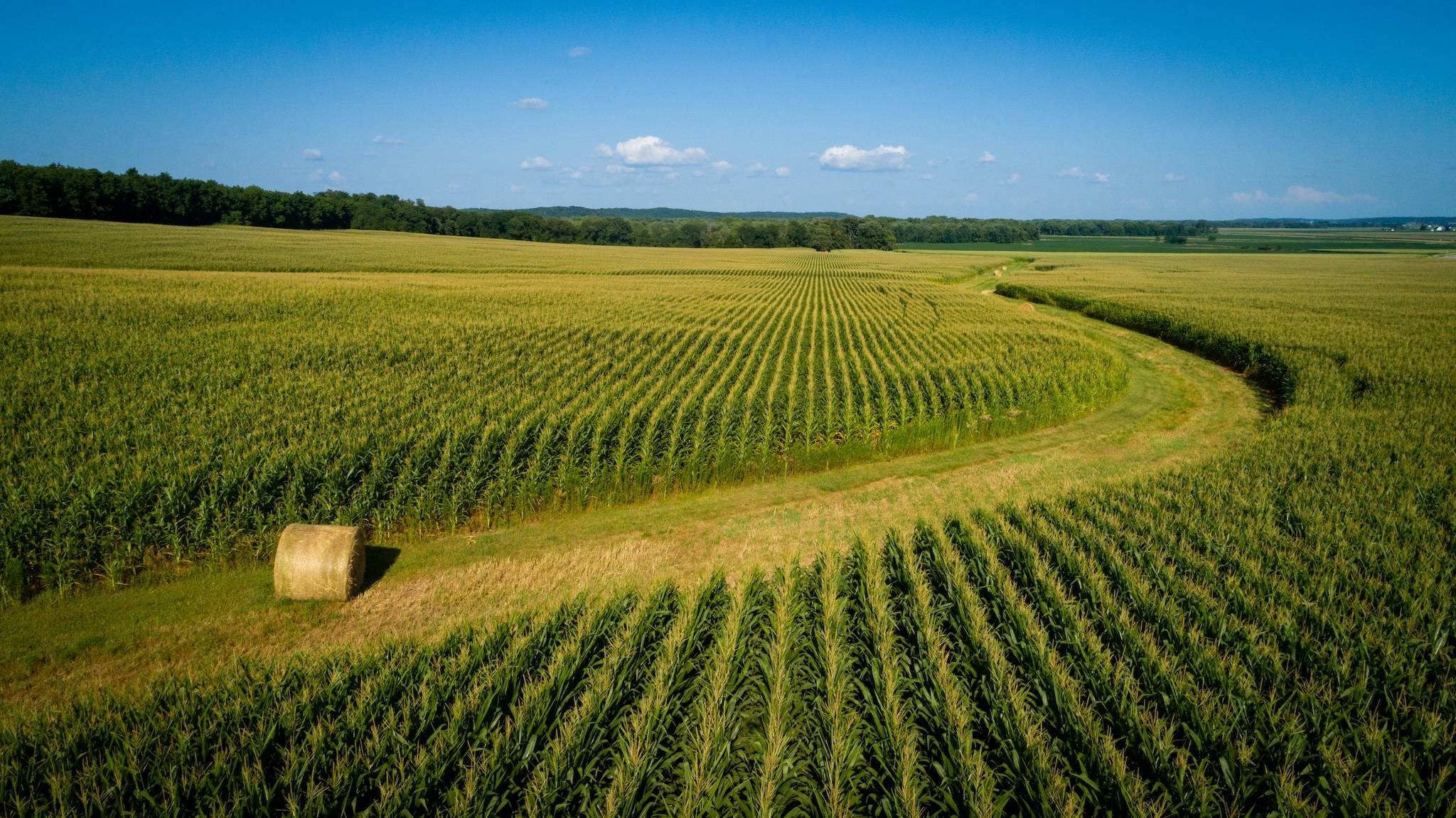
Radon Impact, Measuring and Mitigation
Radon is a colorless, tasteless, and odorless gas and exposure to radon is the second leading cause of lung cancer in the United States, after smoking. Radon-related lung cancers result in an estimated 21,000 deaths annually in the United States.
Radon in Iowa
Iowa has the highest average radon concentrations in the US, with over 70% of homes exceeding the EPA’s action level. Because the invisible gas is so prevalent, 98 counties are deemed a high-risk Zone 1 (Figure 1). Zone 1 for radon is the EPA’s highest-risk category, designating areas with predicted average indoor radon levels greater than 4 pCi/L (picocuries per liter). Radon is a radioactive compound formed by decaying uranium and radium. Radon is highly concentrated in Iowa due to the state’s unique glacial geology. Thousands of years ago, glaciers deposited uranium-rich, finely ground soil and rock across the region. This uranium naturally decays into radon gas, which easily migrates through Iowa’s porous, mixed soils and becomes trapped inside homes, schools and businesses.
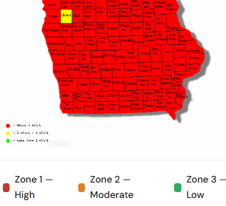
Figure 1. County level radon levels in Iowa (https://radonresources.com/iowa/).
Radon and Lung Cancer
According to the American Cancer Society, radon causes lung cancer because it is a radioactive gas that breaks down into tiny, radioactive particles. When inhaled, these particles lodge in the lungs and emit bursts of energy, which damages DNA. Over time, this damage can mutate lung cells and cause them to grow into cancer.
Steps to Take to Measure and Mitigate Radon
Medical professionals recommend testing your home for radon because testing is the only way to know if your home has radon. Contact your local county health department or call 1-800-383-5992 to purchase a do-it-yourself, low-cost test kit. Test kits can be purchased from most hardware and home improvement stores and on-line. If you would like an Iowa certified measurement professional to test your home, see the list of specialists at Certified Radon Mitigation Companies in Iowa.
If your home or business has high levels of radon, you may decide to install a radon mitigation system yourself or hire a certified professional. There are two types of radon mitigation systems…active and passive. An active radon system uses an inline mechanical fan to continuously draw radon-laden soil gas from beneath your foundation and exhaust it above your roof (Figure 2). A passive system relies entirely on natural air pressure and the “stack effect” (warm air rising) to vent the gas without a fan.
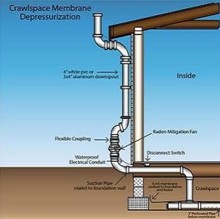
Figure 2. Active Rason Mitigation System.
House File 2297 – Radon Mitigation Requirement
In the 2026 Iowa legislative session, the Iowa house and senate passed House File 2297 that was signed into law by the governor on May 19, 2026. This law established a building code requiring new single-family or two-family residential construction to include a passive method for the mitigation of radon.
Conclusion
Iowa soils are naturally high in radon because of how they were formed by glaciers. If you are concerned about radon in your home or business, consider testing the levels and installing a mitigation system if radon levels are elevated.
Latest Information
Secretary Naig Announces Urban Water Quality Projects
Secretary Naig Opens Sign-Up for Annual Cover Crop Cost-Share Program
Streamside Buffer Pilot Project to Include Greater Des Moines Watershed
Assessing the performance of aged field‐scale woodchip bioreactors in IowaWatershed26 Shared Action Plan – Great Outdoors Foundation
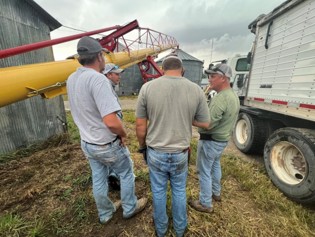
Farmer to Farmer: Steve Kuiper
Steve Kuiper farms around the Knoxville, Iowa area, with his two sons, Brandon and Kevin, and his wife Melinda. Steve has been farming all of his life but has had his own land and interests for the last 39 years. The Kuiper farm runs a corn-soybean rotation of about 45% beans and 55% corn.
Sustainability and legacy are important to Steve, saying, “We are actively working on improving our land each year and we have seen a huge benefit of pattern tiling farms. This has reduced erosion, helped with nutrient holding capacity, and has improved yields by 20-25% without increasing our nutrient inputs. To validate our nutrient programs, we are doing more soil testing and periodic tissue sampling throughout the season.” They have a long-term goal of increasing tile, terraces, buffer strips and their goal is to not let any soil leave their farms. Steve says they are doing everything possible to ensure they are a viable business in the future.
The Kuiper’s treat each field individually to ensure they are meeting the needs of each unique soil type. He says, “We use variable rate technology for our dry fertilizer programs, our nitrogen program and our seeding. We tie our nitrogen plan to what population we are planting, we use yield data and grid sampling for our dry fertilizer program. We have gone from 5 acre to 2.5 acre to 1-acre grids for sampling to get the details we are looking for. We compare our sampling results with what we have removed from the previous crop to ensure we are never going backwards on fertility. We use an in-furrow program, to get the corn fed in its infancy, and then side dress nitrogen, phosphate, boron, zinc and manganese in the V5-V8 stage. We will at times top-dress with our fungicide pass, if necessary, based on tissue samples.”
The Kuipers use a vertical tillage pass in the fall on corn stalks Steve says, “We plant cover crops (mostly cereal rye) on 50% of our corn to soybean acres. We are doing this in our more erosion-prone fields and studying the benefits to our cropping system and organic matter. For any work we do to our fields, we consider what it will do to our soils and how it works financially.”
The Kuipers have two corn test plots every year. Steve says, “We want to test hybrids on our farms because they need to perform there before committing more acres to a particular hybrid.” Steve usually uses longer season hybrids from 110-120 maturity but is thinking about trying some 100-day products also. They variable rate plant from 28,000 – 40,000 depending on the field.
While Steve is always busy on the farm, he also believes it is important to give back to fellow farmers. He does this in several ways, including his role as the first vice president for Iowa Corn Growers Association and as member of the Industrial Usage and U.S. Production Committee. Steve is also involved nationally as a leader of NCGA’s Research and New Uses Action Team. Steve is always willing to share his farm with visitors so he can explain his commitment to productivity and sustainability. He talks about his farm in terms that non-farm visitors can understand, and they can always see his passion for the livelihood he has chosen.
When asked about what he wants others to know about how he farms, Steve says “Small improvements, with attention to detail, are key to farming success. Noo one will do it for you, so it’s up to each individual farmer to improve their farm and processes.”
Upcoming Events:
July 30: Measuring and Interpreting Soil Health Benefits – Practical Farmers of Iowa; 8718 West 109th Street South, Prairie City; Will and Cassie Cannon’s farm. 3:00 – 5:30.
August 4: Cleaning Water With Edge-of-Field Practices for Watersheds and Wildlife – Practical Farmers of Iowa; 1408 Morgan Bridge Road Northwest, Cedar Rapids; 10:00-12:00.
August 11: Nutrient Management Field Day; Reineck. Please contact Kennady Henry at 515-491-3539 or khenry@iasoybeans.com. 11:00 – 1:30.
August 26: Cover Crop Field Day; 1200 215th Ave, Spirit Lake, IA; RSVP: ilf@iastate.edu or 515-294-5429. 5-7pm.
Share This Article


Related Articles
The September Stewardship Advocate discusses harvest season preparations and highlights Iowa Corn farmer Eric Weuve.
The August Stewardship Advocate discusses the Conservation Compass and highlights Iowa corn farmer Paul Gieselman and his family farm.